Great Crested Newt Identification
The Great Crested Newt is the largest and most distinct of the UK’s native newt species, with males growing to approximately 13cm and females reaching up to 17cm in length.
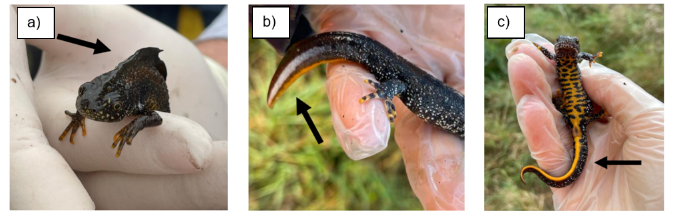
Visually, great crested newts can be identified by the near black, warty skin along their back and sides, which is often contrasted by the white stippling visible on its flanks. However, their most striking characteristic is the underside, where the belly transitions into a vibrant yellow or orange hue, which is decorated with dark irregular blotches. While both sexes share this coloration, females can be further distinguished by a consistent yellow line running along the lower edge of the tail.
The physical appearance of the species shifts significantly during the aquatic breeding season, during which males develop a prominent, jagged skin crest that can reach up to 1.5cm in height. This crest runs along the back and tail, with a slight indent at the tail base. Additionally during this time, breeding males exhibit a swollen cloaca and distinctive silvery-white flash along the side of its tail to attract mates.
Great Crested Newt Habitat
Great crested newts are widespread and found throughout much of lowland England, Wales and southern Scotland.
Compared to mainland Europe, the total UK population is relatively large and distributed over various ecological sites that provide humid conditions at ground level. Many of the largest populations are centred on disused mineral-extraction sites, but lowland farmland forms the majority of great crested newt habitat in the UK.
During the non-breeding season, great crested newts reside in terrestrial habitats that provide humid refuges, such as woodlands or unmanaged grasslands. Typical great crested newt habits where woodland is scarce include hedgerows, dense scrub, swampy meadows, and even disused quarries. These habitats provide opportunities for shelter, foraging, and hibernation.
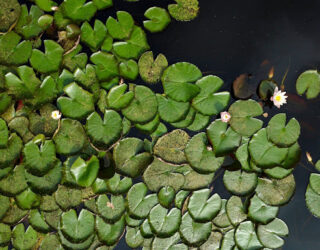
During the breeding season, GCN’s require suitable aquatic habitats with vegetation for egg laying. These ideally need to be without fish, which prey on eggs and larvae. Typical UK examples include larger ponds found in woodland, farmlands, and even those formed following quarrying and mineral extraction. Conversely, it is rare for them to breed in smaller garden ponds.
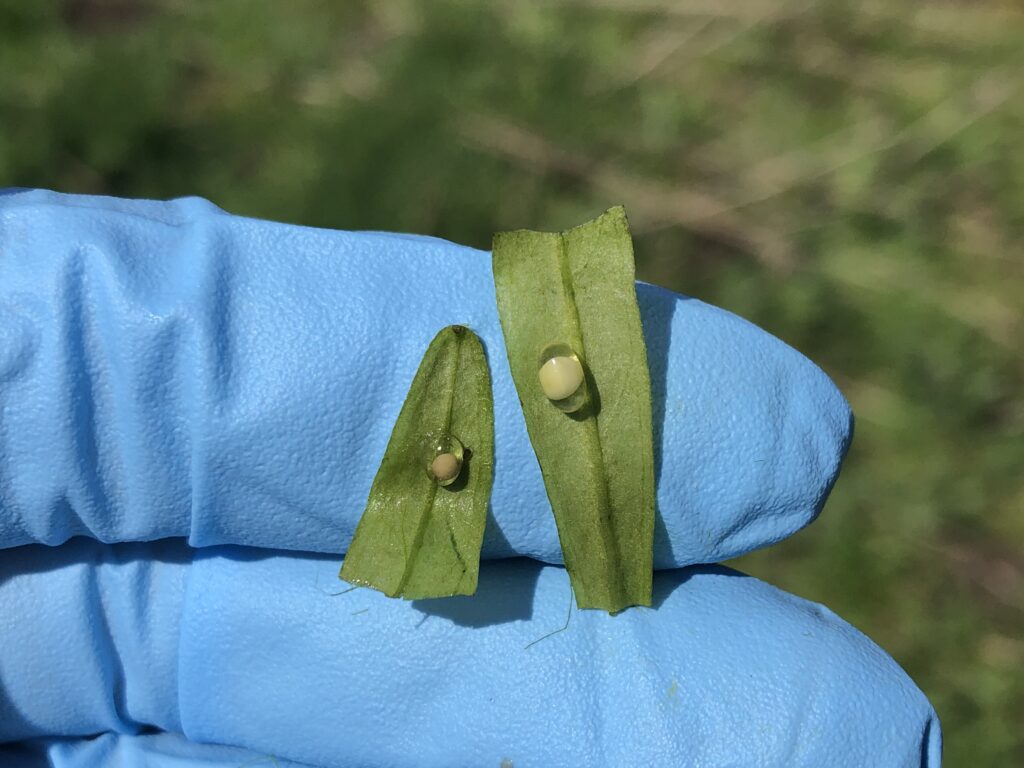 GCN egg (right) and small newt egg (left) found during presence/absence survey.
A preliminary ecological appraisal is undertaken to determine whether a site supports suitable habitat for great crested newt and other protected species.
Great Crested Newt Protection
The great crested newt is protected under the Conservation of Habitats and Species Regulations 2017 (as amended) and the Wildlife and Countryside Act 1981. Taken all together, these make it an offence to:
- deliberately kill, injure, disturb or capture them
- deliberately destroy their eggs
- damage or destroy their breeding sites and resting places
- possess, control or transport them (or any part, alive or dead)
- sell, exchange, or offer for sale or exchange
- disturb them while they occupy a structure or place used for shelter or protection
- obstruct access to a place used for shelter or protection
- possess or transport them (or any part, alive or dead)
Anyone found guilty of an offence could receive an unlimited fine and up to six months in prison for each offence.
Developers must assess potential impacts on Great Crested Newts (GCN) whenever suitable breeding ponds or terrestrial resting habitats are present. An ecological desk study may determine that GCN presence is unlikely if no suitable breeding sites exist within a 250m radius (or 500m for larger developments). Furthermore, GCN may be ruled out if a Habitat Suitability Assessments deems nearby water bodies unsuitable, or if formal field surveys confirm their absence.
Even if a waterbody is not present directly on-site, the presence of suitable aquatic or terrestrial habitats within these radii may require a formal assessment to ensure your project remains compliant with UK wildlife legislation. Failure to follow these guidelines can subsequently cause major project delays and push schedules back.
For these reasons, if you’re planning a project or development, it is highly recommended to carry out a Great Crested Newt survey or mitigation service to ensure a project continues lawfully and without disruption.
Great Crested Newt Survey
Thomson ecologists have expertise in great crested newt surveys, and are trained to work under a professional survey licence that follows the latest best practice guidelines. A typical great crested new survey includes:
Screening Assessment
An initial assessment to determine if there are potential breeding sites with habitat connectivity to the proposed development area. Waterbodies that are likely unsuitable for GCN (e.g. filled in ponds, chlorinated swimming pools, flowing rivers, or fishing lakes) or are separated from the work site by a major dispersal barrier can be scoped out from requiring further assessment at this stage.
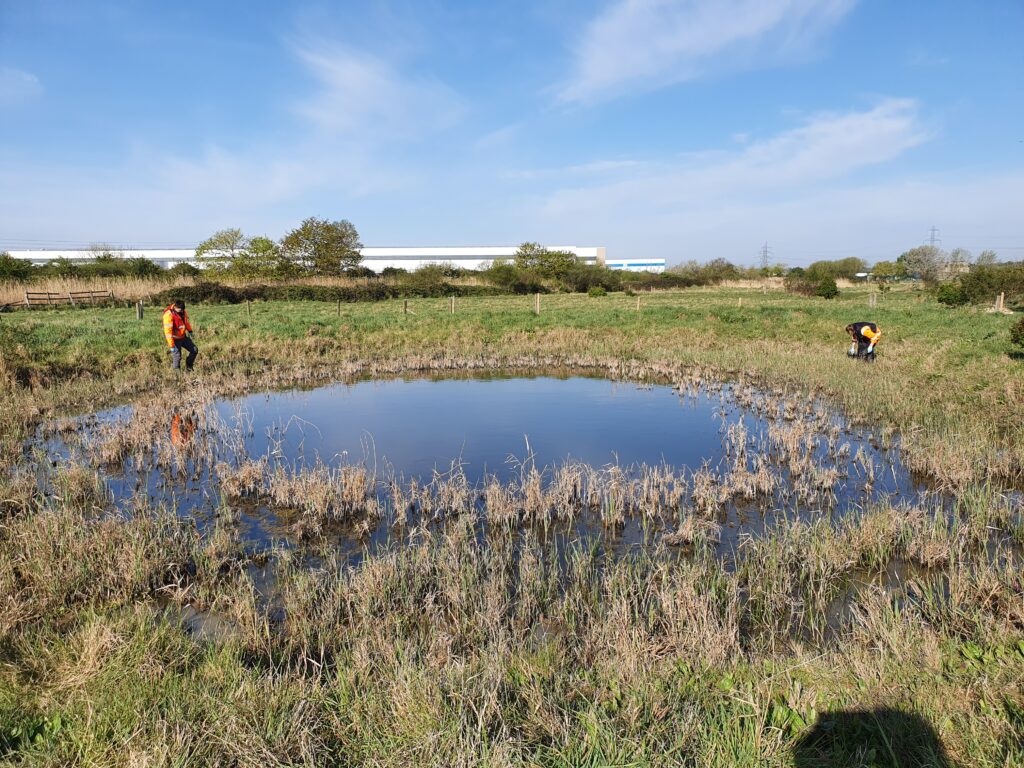
Habitat Suitability Index (HSI) Assessment for great crested newt
A Habitat Suitability Index Assessment can be completed at any time of year (with the optimal time occurring in the spring), and is a useful tool to quantitatively assess how suitable a waterbody is to support GCN on a numeric scale. In general, water bodies with high HSI scores are more likely to support GCN, and larger populations, than those with low scores. A HSI score cannot be used to indicate GCN presence or absence but can be useful in evaluating the general suitability of a waterbody, comparing ponds in different areas, evaluating the suitability of receptor ponds in a proposed mitigation scheme and identifying habitat management priorities.
Great Crested Newt Presence / Likely Absence Survey
All waterbodies not screened out in earlier assessments should be subject to a presence/likely absence survey. This can be in the form of Environmental DNA (eDNA) surveys or more conventional techniques such as bottle trapping, torching, egg searching, refugia checks or netting.
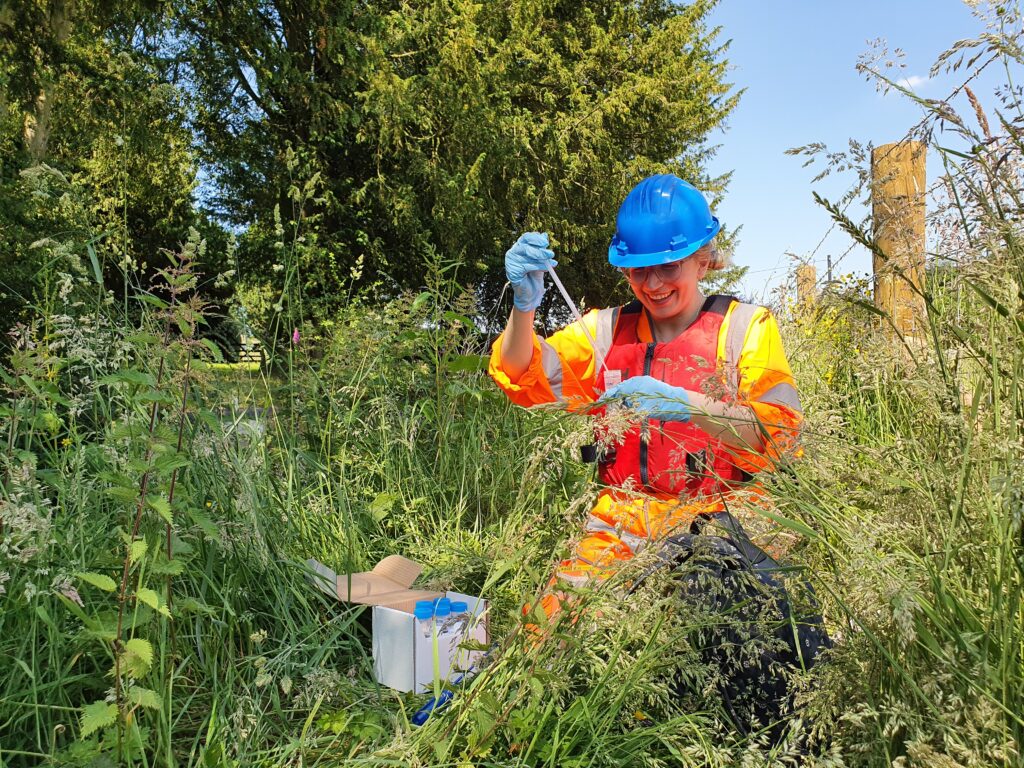
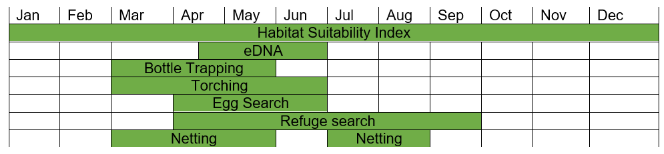
eDNA surveys can be used to detect great crested newts through sampling and testing pond water. Any newts using the ponds will shed genetic material, and this is tested for when the water samples are analysed in the lab. Utilising eDNA surveys can save time and survey effort by scoping out any ponds without GCN in the first instance. Results for eDNA surveys are only accepted by Natural England if the samples were collected between April 15th and June 30th.
Population size class assessment
If a presence or absence survey denotes the presence of great crested newts in a pond, further surveys may be required to establish the population size class. This is done by bottle trapping and torch light counts at night. Bottle trapping is a method that involves submerging bottles into the water to capture newts. The newts are caught in the traps and counted before being released back into the pond unharmed.
Great Crested Newt Survey Season
A great crested newt survey is strictly seasonally constrained, making early project planning essential to avoid year-long delays. To accurately determine GCN presence, absence, or population size, professional pond surveys must be conducted between mid-March and June. Adhering to these industry-standard windows ensures that survey data is robust enough to support planning applications and European Protected Species Licensing (EPSL).
Current best practice guidelines require multiple survey visits. A standard great crested newt survey program consists of a minimum of four and a maximum of six visits, with a critical focus on the peak season. At least half of these site visits occur between mid-April and mid-May to capture the highest level of newt activity and population size.
Below is a summary of optimal GCN survey timings. We have produced a detailed Species Survey Planner to help plan your ecological surveys for all protected species free to download.
Great Crested Newt Reports
Our technical reports detail the results of our surveys to support planning and mitigation licence applications or to report on mandatory monitoring, where required. All our reports are accompanied by geospatial maps and quality checks by our in-house GIS and Mapping teams. Survey reports are required to support some types of mitigation licence applications.
Great Crested Newt Mitigation Guidelines
Implementing a robust great crested newt mitigation strategy is a legal requirement for any development impacting Great Crested Newts or their habitats. Because GCNs are a European Protected Species, developers must either design projects to avoid impacts entirely or obtain a specific wildlife licence from Natural England to proceed legally.
There are three principle licensing routes available: District Level Licensing (DLL), which offers a streamlined approach through a conservation fee for off-site habitat creation; the Low Impact Class Licence for low impact developments; and the site specific Mitigation Licence (A14). The standard route requires a site-specific great crested newt survey and a bespoke mitigation plan designed and supervised by a licensed ecologist.
Our ecological consultants and specialist contracting teams provide practical, cost-effective solutions to ensure your project remains compliant. Our comprehensive mitigation services include:
- Impact Avoidance: We advise on altering project designs and work timings to bypass sensitive biological windows.
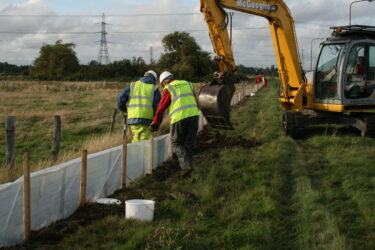
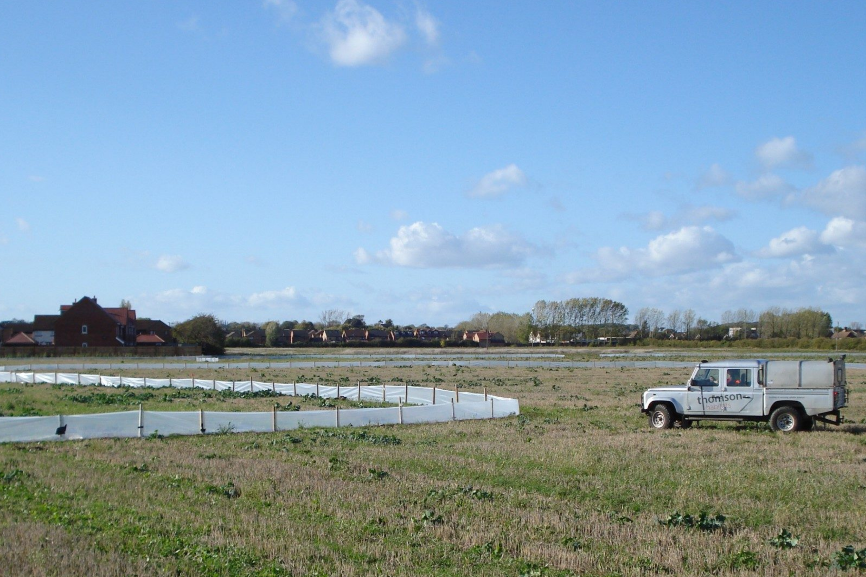
- Translocation Services: Our teams manage both in-situ and ex-situ translocation, using drift fencing and pitfall trapping to safely relocate newts to high-quality receptor sites.
- Exclusion and Protection: We install professional GCN exclusion fencing to prevent newts from re-entering active construction zones.
- Habitat Creation and Enhancement: We design and implement habitat compensation, including the creation of new ponds, the installation of hibernacula, and the restoration of existing terrestrial habitats.
- Long-Term Compliance: To satisfy planning and licence conditions, we provide post-development habitat management, site maintenance, and mandatory population monitoring.
Great Crested Newt Licensing Requirements
As a fully protected species, any unavoidable activity likely to impact GCN or their habitats will need a licence for the works to be undertaken lawfully. The licence enables derogation from the protection normally afforded to the species. There are three licensing options. Our ecological consultants can advise on the most suitable licence type based on your project.
Great Crested Newt Mitigation License (A14): The traditional licence is appropriate for works of any size and duration, so long as mitigation or compensation is in place to conserve the favourable conservation status of GCN. To apply for this licence, detailed data showing GCN population size is required.
Low Impact Class Licence (LICL): LICL is a suitable alternative to the EPSL where the impacts to GCN are below a threshold detailed by Natural England.
District Level License (DLL): Projects can be registered under a DLL at any time of year and are now available in most areas of England. District level licenses are often cheaper than traditional EPSL and reduce the risk of project delays as GCN surveys and mitigation work to translocate newts is not always required.
Under this scheme, developers comply with their legal duty to protect GCN by paying conservation fees that are used to create and maintain off-site ponds and habitat in locations that will benefit the species for the foreseeable future.
Find out more about GCN licences in our article – Great crested newt licensing explained.
Great Crested Newt – How Thomson Can Help
As experts in environmental compliance, we’re experienced in great crested newt surveys, licensing requirements and appropriate mitigation works. If you have a project that we can help with, get in touch with us to discuss your needs and the most cost effective and timely options available.
Contact us now