Rhododendron ponticum is one of the UK’s most damaging invasive plant species, capable of turning valuable woodlands, heathlands and estate grounds into dense, unproductive thickets. It is more than a simple vegetation management issue; left unmanaged, it becomes a long‑term ecological and land management challenge with significant costs for restoration and compliance.
What is Rhododendron and where did it come from?
Rhododendron ponticum is a large, evergreen shrub native to parts of the Iberian Peninsula, the Caucasus and the eastern Mediterranean. It was introduced to Britain in the 18th century as an ornamental plant and became particularly popular during the Victorian era, especially on estates where it was used for shelter, game cover and decorative planting.
Over time, it escaped gardens and estate grounds and became naturalised across many parts of the UK. It thrives in areas with high rainfall and acidic soils and is now commonly found in woodlands, heathlands, estate grounds, river corridors and neglected gardens.
How do you identify invasive Rhododendron?
The invasive Rhododendron most commonly encountered in the UK is Rhododendron ponticum, which typically grows into a large, multi‑stemmed shrub. Mature plants can reach 5 metres or more in height and often form dense, impenetrable thickets that dominate the understorey. From a distance, infestations appear as continuous blocks of dark green foliage, with little vegetation visible beneath.
The following features can help you recognise Rhododendron ponticum on your site:
- Large, leathery, dark green leaves that remain on the plant all year
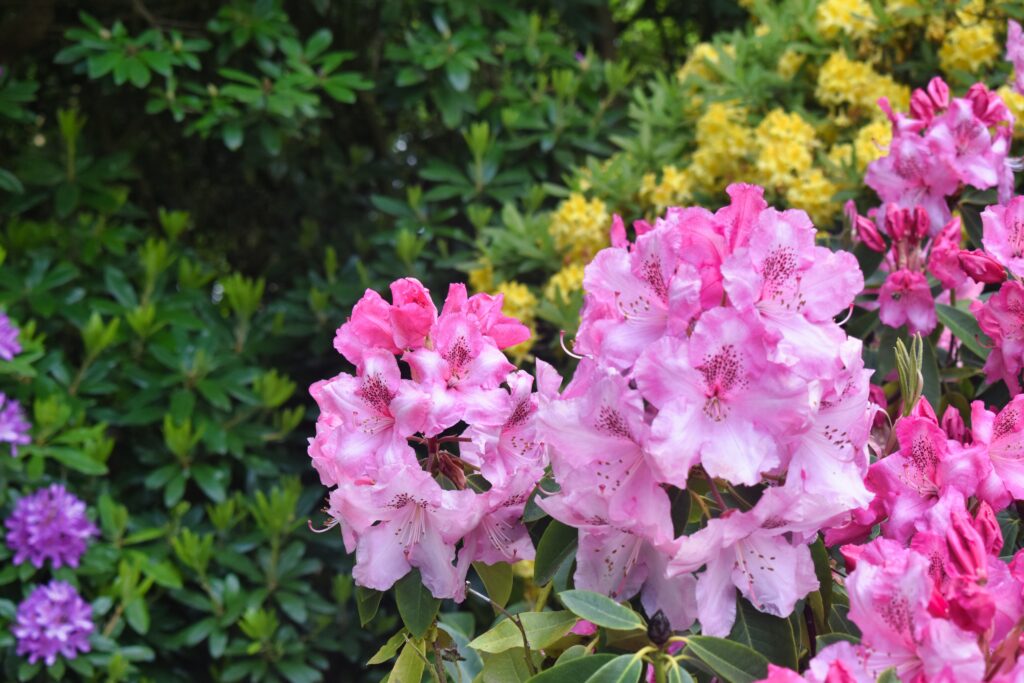
- Clusters of trumpet‑shaped flowers that are purple to lilac in colour, usually between May and June
- Thick, woody stems and branches that form a multi‑stemmed shrub
- Dense growth that shades out almost all ground vegetation beneath the canopy
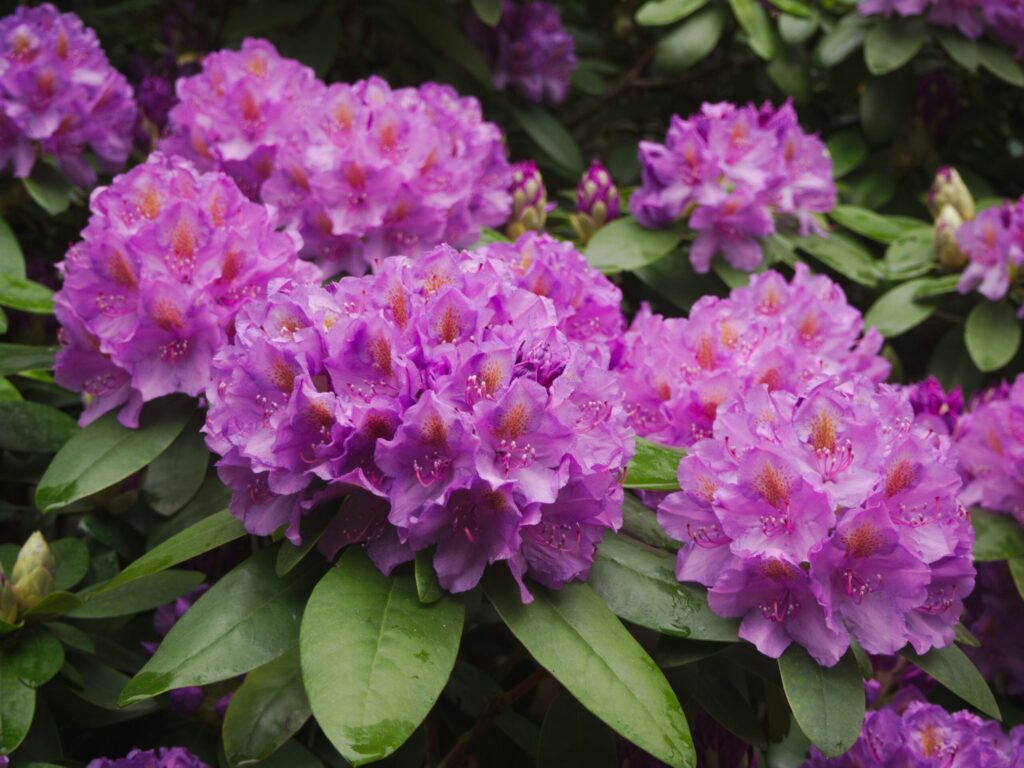
On larger sites, Rhododendron often forms extensive monocultures, making affected areas relatively easy to identify from a distance, particularly during flowering season.
Is Rhododendron the same as Azaleas and Camellias?
Rhododendrons are frequently confused with azaleas because both belong to the same genus and can have similar flowers. However, azaleas are generally smaller, less vigorous and have thinner, more delicate leaves. They also rarely form the kind of dense thickets associated with Rhododendron.
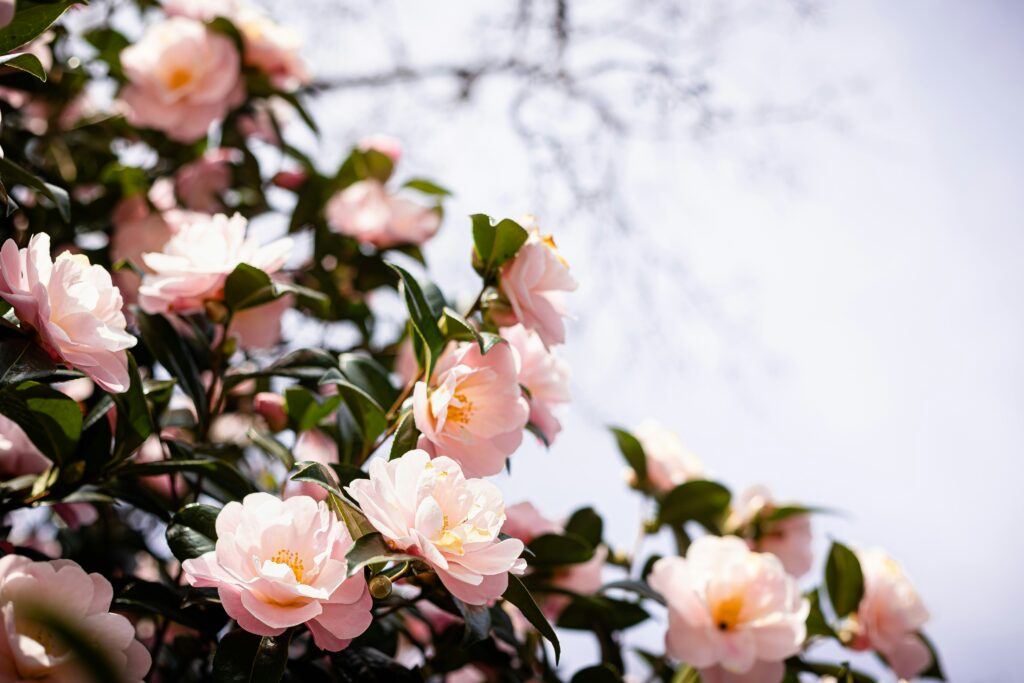
Camellias can also be mistaken for Rhododendrons due to their evergreen foliage. However, their followers are typically larger and more closely resemble roses, possessing a distinct appearance compared with the funnel‑shaped blooms of Rhododendron.
Why is Rhododendron a problem for UK habitats?
Rhododendron is considered one of the UK’s most damaging invasive plants due to its ability to spread and dominate a wide range of habitats. It grows aggressively, forming dense stands that block sunlight and prevent native plants, wildflowers, and young trees from growing. Over time, this shading effect can significantly reduce biodiversity and inhibit natural regeneration of trees and shrubs.
The species is particularly problematic in woodlands and heathlands, where it suppresses natural regeneration and displaces native species. It also acts as a host for plant pathogens such as Phytophthora ramorum, a disease that can affect a wide range of trees and shrubs.
For landowners and managers, this combination of ecological impact and disease risk means that leaving Rhododendron unmanaged can create long‑term problems for site condition and value.
What are the legal restrictions on Rhododendron in the UK?
In the UK, Rhododendron ponticum is listed under Schedule 9 of the Wildlife and Countryside Act 1981. This makes it an offence to plant or otherwise cause it to grow in the wild. Landowners are not automatically required to remove Rhododendron on their property, but they do have a responsibility to prevent its spread beyond their boundary where it could impact neighbouring land or natural habitats.
Management, transportation and disposal of invasive plant material should always be carried out carefully to avoid accidental spread. For sites close to sensitive habitats, protected areas or watercourses, compliance and biosecurity considerations are particularly important, and professional advice is recommended.
How to control Rhododendron ponticum effectively?
Effective Rhododendron control usually requires a combination of mechanical and chemical methods. Simply cutting plants down without follow‑up treatment is rarely effective, as the species readily regenerates from cut stumps.
Management programmes begin with a survey to establish the extent of the infestation. Mapping the distribution and density helps prioritise areas and sequence works so that the most critical zones are tackled first. Mature shrubs are then cut or cleared to ground level using hand tools or specialist machinery. To prevent regrowth, cut stumps are then treated with an appropriate herbicide.
A robust control programme will usually include:
- Survey and mapping of the infestation
- Cutting or clearance of mature plants to ground level
- Herbicide treatment of cut stumps to prevent regrowth
- Monitoring for seedlings and regrowth over subsequent seasons
- Follow‑up treatments where new plants or regrowth are identified
Because Rhododendron produces large quantities of seed, ongoing monitoring and repeat control are essential.
How to remove Rhododendron?
Rhododendron can be managed at various times of year, but late summer through to autumn is considered the most effective period for herbicide treatments. During this time, the plant is actively transporting nutrients down to its root system, which helps systemic herbicides move to the parts of the plant that need to be controlled.
Mechanical removal can occur throughout much of the year, provided site access and ground conditions allow. However, ecological constraints must be considered, particularly nesting birds in spring and early summer or protected species that might use dense Rhododendron stands for shelter.
Is Rhododendron toxic?
For most people, simply touching Rhododendron foliage or stems is unlikely to cause harm. However, the plant contains naturally occurring toxins known as grayanotoxins. If parts of the plant are eaten, they can be poisonous to humans and animals and may cause symptoms such as:
- Nausea
- Vomiting
- Dizziness
- Changes in heart rate
Livestock are particularly at risk if they consume the foliage.
When handling large quantities of vegetation during removal works, appropriate protective equipment should be used. Wearing gloves, eye protection and suitable clothing helps to minimise direct contact with plant material and sap, while good hygiene practices reduce the risk of accidental exposure.
Why should landowners tackle Rhododendron early?
One reason Rhododendron is so invasive is its remarkable reproductive capacity. A mature plant can produce millions of seeds each year, and those seeds can be dispersed by wind and water over considerable distances. Seedlings can then establish and, if left unmanaged, grow into dense stands that are increasingly difficult and costly to remove.
The plant is also highly resilient. Few native insects eat it, its foliage is generally unpalatable to grazing animals, and dense stands can persist for decades.
For developers and landowners, Rhododendron should therefore be viewed not simply as a vegetation management issue but as a long‑term ecological and land management challenge.
How Thomson Can help
Thomson Environmental Consultants support landowners, developers and property managers through the entire Rhododendron management process, from initial surveys and mapping through to treatment, removal and ongoing monitoring. Our ecological experts assess the extent of the infestation, identify ecological constraints and design programmes that combine mechanical clearance with targeted herbicide application.
Working with experienced invasive species specialists helps integrate Rhododendron management with wider ecological objectives and long‑term land management plans. Thomson’s professional support can reduce risk, protect habitat value and restore sites affected by this invasive shrub.