With its bright green, glossy leaves and extraordinary growth rate, floating pennywort (Hydrocotyle ranunculoides) might initially appear to be a harmless aquatic plant. However, for UK developers, tier-1 contractors, infrastructure managers, and local authorities, it represents one of the most aggressive and ecologically destructive invasive species present to UK waterways.
First introduced to the UK during the 1980s as an ornamental plant for garden ponds, floating pennywort quickly escaped cultivation and established itself in natural watercourses. Native to North and South America, this freshwater plant thrives in still or slow-moving water systems, including rivers, canals, lakes, reservoirs, drainage channels, and sensitive wetland habitats.
Identifying Floating Pennywort
Identifying floating pennywort during the early stages of establishment is critical to preventing severe disruption. During the warmer spring and summer months, an infestation can expand by up to 20 cm per day. This rapid growth allows the plant to form dense, interwoven mats across open water surfaces in a matter of weeks.
Key identification features:
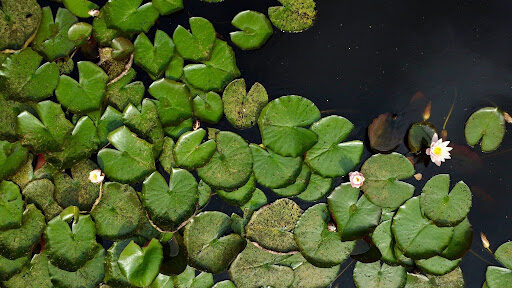
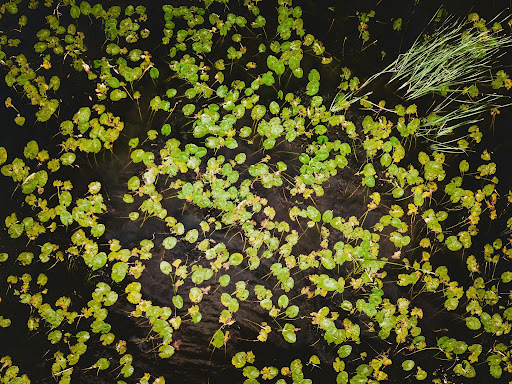
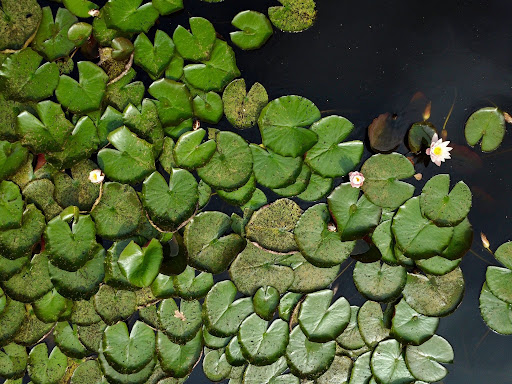
- Leaves: bright green, glossy, and distinctly kidney-shaped, typically measuring between 2 cm and 7 cm in width.
- Leaf Margins: scalloped or crinkled along the edges, with long, fleshy stalks attached at the edge between two lobes.
- Flowers: inconspicuous, small white or pale flowers that occasionally bloom between July and August.
- Stems: long, fleshy creeping stems that float freely on the water surface and root effortlessly at nodes.
- Growth Pattern: forms thick, interwoven surface mats across open water that frequently extend beyond the water’s edge onto damp ground along riverbanks.
Confusion with Other Plants
Because several aquatic species share similar leaf structures, floating pennywort is often misidentified, and is most commonly confused with native marsh pennywort (Hydrocotyle vulgaris). Accurate identification prior to any work commencing is essential in order to protect wetland species, as well as remain compliant with environmental regulations.
The key distinction lies in the leaf structure and stalk attachment. Floating pennywort has larger kidney-shaped leaves, with the leaf stalk attached at the edge between two distinct lobes. By contrast, native marsh pennywort features smaller, completely round leaves where the stalk attaches directly to the centre of the leaf underside, giving it a distinct umbrella-like appearance.
Furthermore, their growth habits differ significantly across aquatic environments. Marsh pennywort is strictly rooted in damp ground or shallow margins and never produces extensive floating mats, whereas floating pennywort grows unhindered across open water bodies and spreads rapidly to form thick surface carpets.
Is Floating Pennywort Dangerous?
Floating pennywort is not toxic to humans or pets, nor does it present direct public health hazards. While appropriate hygiene and safety practices should be maintained when handling any wild aquatic vegetation, the principal threat posed by this invasive species is ecological, operational, and financial rather than toxicological.
The ecological damage it causes stems directly from its ability to form impenetrable surface coverage. As these dense mats expand, they block sunlight from reaching submerged plants below, suppressing native aquatic vegetation and drastically lowering plant biodiversity. Additionally, as the plant mass decomposes, dissolved oxygen levels within the water column plummet, creating hypoxic conditions that threaten fish, aquatic invertebrates, and amphibians.
Alongside habitat degradation, floating pennywort severely impacts water body mechanics and physical infrastructure. Dense growth slows water velocity, accelerates silt accumulation, and obstructs key water management assets such as pumps, sluices, and drainage channels. Consequently, unmanaged stands significantly increase localised flood risk and can lead to costly operational delays for infrastructure operators, water utilities, and site managers. Across Great Britain and Europe, the combined annual economic impact of floating pennywort exceeds £25 million.
Floating Pennywort UK Law: What Are the Legal Restrictions
Floating pennywort is a strictly regulated invasive non-native species in the UK. Developers, landowners, and infrastructure operators face clear statutory responsibilities when managing sites where this plant is present.
- Offence to spread: under Schedule 9 of the Wildlife and Countryside Act 1981 and the Invasive Alien Species (Enforcement and Permitting) Order 2019, it is a criminal offence to plant floating pennywort or cause it to grow in the wild.
- Sale ban: to prevent accidental introduction into gardens or natural waterbodies, the species has been legally banned from sale across the UK since 2014.
- Controlled waste disposal: any plant containing viable fragments removed from a site is legally classified as controlled waste and must be handled, transported, and disposed of under strict duty of care protocols.
- Commercial and planning impacts: failing to manage an infestation can cause severe project delays, trigger civil disputes with neighbouring landowners, and jeopardise Biodiversity Net Gain (BNG) targets by deteriorating baseline ecological value.
How to Remove Floating Pennywort
Successful eradication requires a structured, multi-phase approach combining early intervention, integrated control techniques, and strict biosecurity measures. Because it possesses exceptional regenerative capabilities, attempting uncoordinated clearances can cause tiny fragments to sever and drift downstream to establish new infestations.
The optimal window for management is spring and early summer when the plant enters its active growing phase. Tackling growth early in the season targets the plant while biomass is relatively low, making containment far easier before rapid summer growth takes hold. However, because fragment regrowth is common, management plans must incorporate repeated follow-up treatments and monitoring.
Manual and mechanical removal: hand-pulling is effective for isolated, newly established stands, provided all root networks and floating fragments are meticulously removed. Larger infestations require specialist mechanical harvesters or aquatic cutters, supported by downstream containment booms to capture floating debris.
Chemical control: targeted herbicide application can be deployed on suitable sites by accredited professionals. Any chemical work in or near watercourses requires statutory environmental permits from the Environment Agency or regional equivalent.
Biological control options: the floating pennywort weevil (Listronotus elongatus) has been thoroughly researched and approved as a biological control agent in the UK, offering a sustainable, long-term tool for integrated management programmes.
Strict site biosecurity: Implementing rigorous “Check, Clean, Dry” biosecurity protocols for all boots, vehicles, aquatic machinery, and survey equipment is essential to prevent off-site transfer of microscopic plant fragments.
How Thomson Can Support Your Project
Attempting to clear floating pennywort without specialist support carries high commercial and legal risks. Incomplete removal frequently exacerbates the spread, resulting in escalated management costs and potential legal liabilities.
Thomson Environmental Consultants provides end-to-end invasive species management designed to keep your project compliant, on schedule, and within budget.
Our team of experts begins by conducting comprehensive aquatic surveys and utilising advanced GIS mapping technology to assess the extent of the infestation. From there, we design site-specific management strategies tailored to your operational constraints. We also handle all necessary regulatory permitting with environmental authorities and provide guidance to ensure your site meets its mandatory Biodiversity Net Gain obligations.
From initial identification through to final site clearance and long-term monitoring, our ecology experts manage the entire process, enabling you to focus on your core project objectives.