The brief
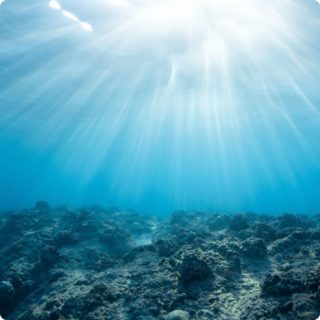
As part of the Marine Natural Capital and Ecosystems Assessment programme, the Joint Nature Conservation Committee, in collaboration with the Agri-Food and Biosciences Institute, conducted an offshore seabed survey in Scottish and Irish Marine Protected Areas. It targeted a range of habitats, including deep circalittoral mud, deep circalittoral sand, sublittoral sediment, and deep circalittoral mixed sediments. The data collection aimed at addressing information gaps in marine offshore habitats to meet policy obligations and add value to the data already obtained.
Sampling was conducted by JNCC using the Research Vessel Corystes in the seas containing the St. Kilda Special Protection Area, the Stanton Banks Special Area of Conservation, and the South Rigg Marine Conservation Zone.
Thomson was awarded the contract through JNCC’s procurement processes to analyse the samples collected and produce a report on our findings.
What we did
Thomson analysed 100 macrofaunal samples and 111 particle size analysis samples in line with the NMBAQC (North-east Atlantic Marine Biological Analytical Quality Control) protocols and guidelines. Our experienced team of expert analysts identified macrofaunal samples to the lowest taxonomic level practicable, which, in most cases, is to the species level.
Organisms were biomassed to provide a weight for specimens recorded from the three sites. A reference collection, which comprised an example of each taxon recorded across the project, was compiled. These collections were then sent to relevant museums for storage.
Using statistical analysis of data from particle size analysis and macrofaunal analysis, biotopes were assigned to the stations. This was based upon similarity of faunal assemblages and sediment type to the classifications outlined by JNCC’s Marine Habitat Classification of Britain and Ireland and matched to the appropriate EUNIS code. A concise report was produced according to JNCC’s template and style. This outlined the scope, methodology, the results of the analyses, and an account of the conservation importance of the site, with reference to any species or communities of interest that were identified.
Outcome
The report produced by Thomson outlined the Biotopes across all stations sampled within the 3 protected sites surveyed by JNCC. This data provides information about these protected areas and their associated habitats, addressing to some degree, the information gaps outlined in the original brief.
Related Projects
-
Joint Nature Conservation CommitteeLocation
-
Offshore Sites in Scottish and Irish Waters
Services offered -
Our other projects




We cover all aspects of environmental consultation – from smaller surveys through to strategic projects.

At Thomson, we strive to deliver a pragmatic and innovative approach to environmental compliance.
Working in partnership with our clients, our team of environmental specialists ensures objectives are met, with maximum efficiency for our clients, and minimal impact on the natural world.